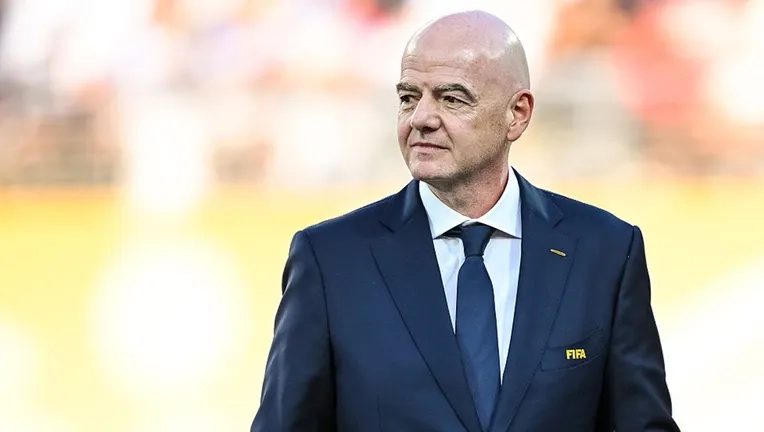
FIFA president Gianni Infantino has abandoned a controversial plan to sell a stake in future World Cup revenues to private investors, following fierce opposition from UEFA, CONCACAF, and the Asian Football Confederation (AFC). The reversal was confirmed in the early hours of Saturday, 1 August 2026 (published 1:31 PM EAT), but the climbdown has not been enough to save Infantino’s standing with UEFA, which has formally declared it has lost confidence in his leadership.
What Was the FIFA Forward Enterprise Plan?
Earlier in the week, FIFA had unveiled proposals for a new entity called FIFA Forward Enterprise (FFE), designed to combine the sale of FIFA’s commercial rights — broadcasting, sponsorship, ticketing, and licensing — with the operational running of its tournaments. Under the plan, FIFA hoped to raise as much as $4.2 billion (about £3.1 billion) by selling minority stakes in FFE, which the governing body valued at roughly $20 billion.
FIFA argued the move could unlock more than $10 billion in football development funding over four years, and had reportedly offered member associations a $30.1 million incentive to back the proposal ahead of a September 19 vote.
Why the Backlash?
The plan drew immediate criticism from football’s three largest confederations outside Africa and South America — UEFA, CONCACAF, and the AFC — all of which raised concerns about the speed and secrecy of the process. Politicians also weighed in: UK Prime Minister Andy Burnham called for an urgent review of FIFA’s governance, while Culture Secretary Lisa Nandy said it was time to “protect” the game, and England’s Football Association voiced deep concern.
Pressure escalated further after senior FIFA advisor Carlos Cordeiro resigned in protest, warning that selling a World Cup stake would be damaging for football’s long-term future and stressing he had played no part in drafting the proposal. FIFA chief operating officer Kevin Lamour also broke ranks, telling reporters that staff had been kept in the dark and describing the plan as driven by a single individual rather than the organisation as a whole.
Infantino’s Climbdown
In a statement issued in his own name rather than FIFA’s, Infantino said the project had been intended to strengthen member associations, particularly in countries where support is most needed, but acknowledged it had created divisions that outweighed its original purpose. He confirmed the proposal would not proceed and said he intended to bring stakeholders back together in the coming weeks to keep growing the game, especially in nations that need support most.
UEFA’s Response: “Trust Has Only Just Begun” to Rebuild
UEFA welcomed the reversal but stopped short of extending goodwill to Infantino personally. The confederation said football is not for sale and criticised what it called a secretive, fast-tracked scheme, adding that current FIFA leadership no longer commands the confidence of UEFA or large parts of the wider football family. UEFA also pointed to FIFA’s reported reserves of more than $5 billion, arguing existing funds could support grassroots development without any need to sell off assets, and pledged to work with confederations on a new approach to distributing FIFA Forward resources.
The AFC’s president, Sheikh Salman bin Ibrahim Al Khalifa, echoed the sentiment, insisting that any initiative capable of reshaping global football must go through proper consultation with confederations, the FIFA Council, and member associations before being pushed forward.
What This Means for Infantino’s Future
The episode has reopened questions about Infantino’s grip on FIFA ahead of the organisation’s presidential election, scheduled for March. Until this week, Infantino was expected to run unopposed, having secured the backing of more than 200 of FIFA’s 211 member associations, including England’s FA. That support base is now considered less certain, with rival federations reportedly reassessing their positions before the November 18 candidacy deadline.
Names circulating as potential challengers include AFC president Sheikh Salman bin Ibrahim Al Khalifa, CONCACAF president Victor Montagliani, and UEFA president Aleksander Ceferin — though none has publicly signalled an intention to run against Infantino at this stage.
Frequently Asked Questions
What was FIFA planning to sell?
FIFA proposed selling minority, non-controlling stakes in a new entity, FIFA Forward Enterprise, which would have held its commercial rights and tournament operations, aiming to raise up to $4.2 billion from private investors.
Why did FIFA cancel the plan?
Infantino cited internal divisions created by the proposal, following strong opposition from UEFA, CONCACAF, and the AFC, plus criticism from UK political figures and FIFA’s own senior staff.
Has Infantino apologised?
No. His statement announcing the reversal did not include an apology, which UEFA and commentators have noted.
Does this affect Infantino’s position as FIFA president?
Not immediately, but UEFA has declared a loss of confidence in his leadership, and his previously uncontested path to re-election in March is now viewed as less certain.
When is the next FIFA presidential election?
March 2027, with the candidacy declaration deadline set for November 18, 2026.
Who could challenge Infantino for the FIFA presidency?
Potential names include AFC president Sheikh Salman bin Ibrahim Al Khalifa, CONCACAF president Victor Montagliani, and UEFA president Aleksander Ceferin, though none has confirmed a run.