England got their 2026 World Cup campaign off to a dramatic start a nervy first half against Croatia in Dallas giving way to a blistering second-half display that ended in a 4-2 victory. But Thomas Tuchel now faces some serious selection questions heading into the Ghana clash, with key players carrying knocks and a defensive performance that raised more questions than it answered.
Here’s a deep dive into the three biggest issues Tuchel must resolve before kick-off.
1. Declan Rice: Play Him Injury or Not
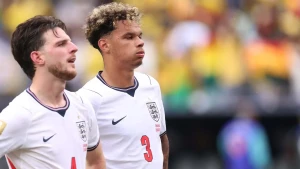
Declan Rice was substituted in the 72nd minute against Croatia, with Tuchel citing the decision as a precaution after the Arsenal midfielder felt discomfort in his lower back and upper hamstring. What has since emerged is more concerning Rice revealed he has been playing through neural pain in his hamstring since Christmas.
That’s six months of managing an ongoing issue across what has been an extraordinary workload. Rice played 63 matches across the 2025/26 club season more than any other player in the entire England squad. By any measure, that is a remarkable feat of durability.
Tuchel has confirmed Rice will be available for the Ghana fixture. And the consensus among analysts is clear: he must start.
The logic is simple. England are not yet in a position to rotate their most important midfielder. Rice is the heartbeat of this team the defensive anchor, the progressive carrier, the engine that allows others to flourish around him. Losing him from the starting XI against a Ghana side that will press and probe would fundamentally change England’s structure.
The smarter approach is to get him through the Ghana game and, if England secure top spot in Group L, assess whether he can be carefully managed against Panama in the final group fixture.
2. Bukayo Saka: Don’t Rush Him Back
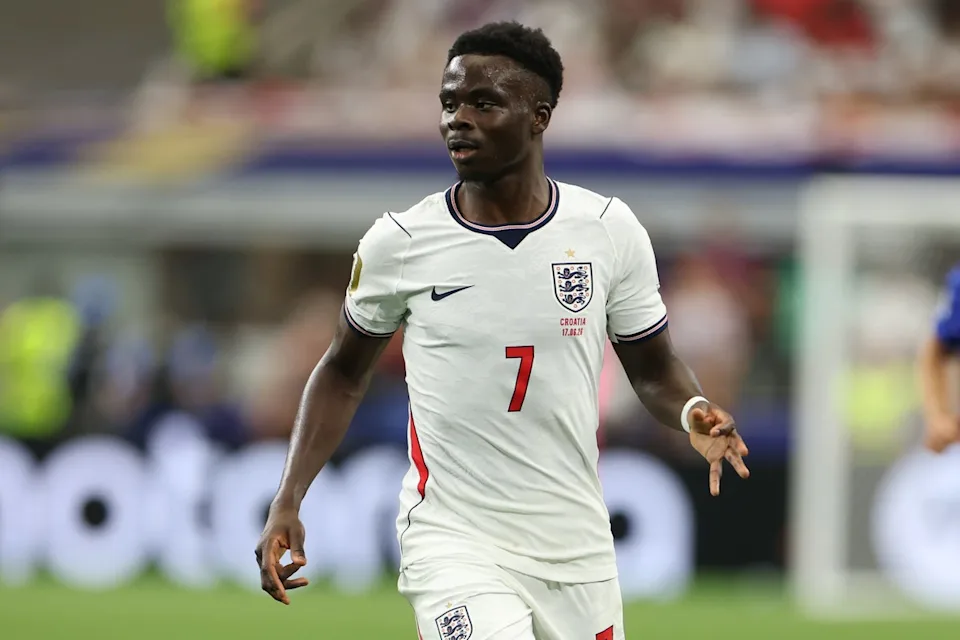
The Bukayo Saka situation is more delicate. England’s record goalscorer from open play at Euro 2024 was not fit enough to start against Croatia, coming off the bench with 20 minutes remaining as Noni Madueke filled the right wing berth from the outset.
Saka has been nursing an Achilles problem an injury that requires careful handling, particularly at a World Cup where the schedule is relentless and the physical demands are amplified. The fact he was kept on the bench for the opener suggests this is a more complex situation than Rice’s hamstring concern.
The risk calculus here is straightforward: push Saka back too soon and you potentially lose him for the remainder of the tournament. England would lose one of their most technically gifted and dangerous attackers at the very moment the stakes are highest in the knockout rounds.
There is, however, a longer-term complication. Madueke started against Croatia and impressed sufficiently to make the decision awkward. The longer Saka remains absent from the starting XI, the more difficult it becomes to simply slot him back in ahead of someone who has been performing. Tournament football does not reward sentiment it rewards form and continuity.
The ideal outcome for England is that Saka recovers fully, comes into the Ghana game from the bench again if necessary, and builds his way back to full fitness and sharpness in time for the knockout stages. Forcing the issue against Ghana, however, would be a gamble not worth taking.
3. The Guehi-Stones Centre-Back Puzzle
Perhaps the most straightforward of Tuchel’s selection headaches at least in terms of what the evidence suggests is who should start alongside John Stones at centre-back.
Against Croatia, Stones was paired with Ezri Konsa. Stones struggled, most visibly for Croatia’s opening goal where he committed too early to a challenge and allowed the space for the move that led to Martin Baturina’s strike. It was the kind of error that speaks to a player still finding his rhythm understandable given Stones managed fewer than 440 Premier League minutes across the entire 2024/25 season.
Marc Guehi, widely regarded as one of England’s most reliable defenders over the past two seasons, started on the bench. For many observers, that was a surprise. Guehi is sharp, commanding in the air, composed on the ball, and currently playing some of the best football of his career. He was an automatic selection conversation for England’s defence throughout qualifying, and there is a strong case that he should be the first name on the team sheet at centre-back.
The sensible solution may be to keep faith with Stones bringing him was a statement of intent, and benching him after one game sends the wrong message but pair him with Guehi rather than Konsa. Stones brings major tournament experience across five previous campaigns with England and reads the game intelligently when at his best. The hope is that with two or three full 90-minute performances under his belt, he will be considerably sharper by the time the knockout rounds arrive.
Guehi alongside Stones gives England their best defensive balance an organizer with elite reading of the game next to an experienced, technically excellent partner who can carry the ball out from the back.
The Bigger Picture: Let’s Not Get Carried Away Yet
England’s second half against Croatia was genuinely exciting. From the 45th to the 75th minute, the Three Lions looked fluid, direct, and dangerous exactly the kind of football that gets a nation dreaming of July glory.
But the first half was a different story. England looked disjointed, conceded twice, and looked vulnerable to a Croatia side that, on paper, should not have been able to trouble them in the way they did. The reason the second half felt so euphoric is partly because the opening 45 minutes set such a low bar.
The reality of the 2026 World Cup is that it has been a high-quality tournament across the board, with multiple nations putting in impressive early performances. England’s group position is strong, but the knockout bracket may not fall as kindly as anticipated before the tournament began several groups have produced unexpected results, meaning the projected “easier” route through the draw may have shifted.
The smart position is measured optimism. England have genuine quality, a world-class manager in Tuchel, and enough individual brilliance to hurt any team on the right day. But the knockout stages will be a different test entirely — and getting there in one piece, with Rice fit, Saka returning, and the defensive unit properly calibrated, matters far more than how England look against Ghana.
Get these two group games done. Then assess.
England’s Key Selection Decisions vs Ghana Summary
| Position | Likely Starter | Key Concern |
|---|---|---|
| Central Midfield | Declan Rice | Lower back / hamstring managed carefully |
| Right Wing | Noni Madueke | Saka not yet fit enough to start |
| Centre-Back | John Stones | Needs minutes to find form and rhythm |
| Centre-Back | Marc Guehi | Should be recalled strongest partner for Stones |
England’s Path Through Group L
England’s 4-2 opening win over Croatia puts them in a strong position in Group L. The Ghana fixture is the critical second test a result here could effectively seal top spot and allow Tuchel to manage his squad heading into the Panama clash.
Key priorities for England vs Ghana:
- Protect Rice’s fitness without neutering midfield control
- Integrate Saka gradually rather than risk a full return too soon
- Tighten the defensive partnership with Guehi back in the fold
- Build rhythm and cohesion ahead of what promises to be a demanding knockout bracket
England’s 2026 World Cup campaign continues with their Group L fixture against Ghana. Full analysis, team news, and match coverage available here on the blog.