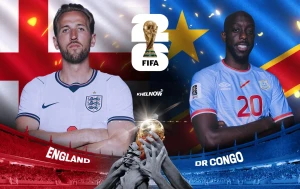
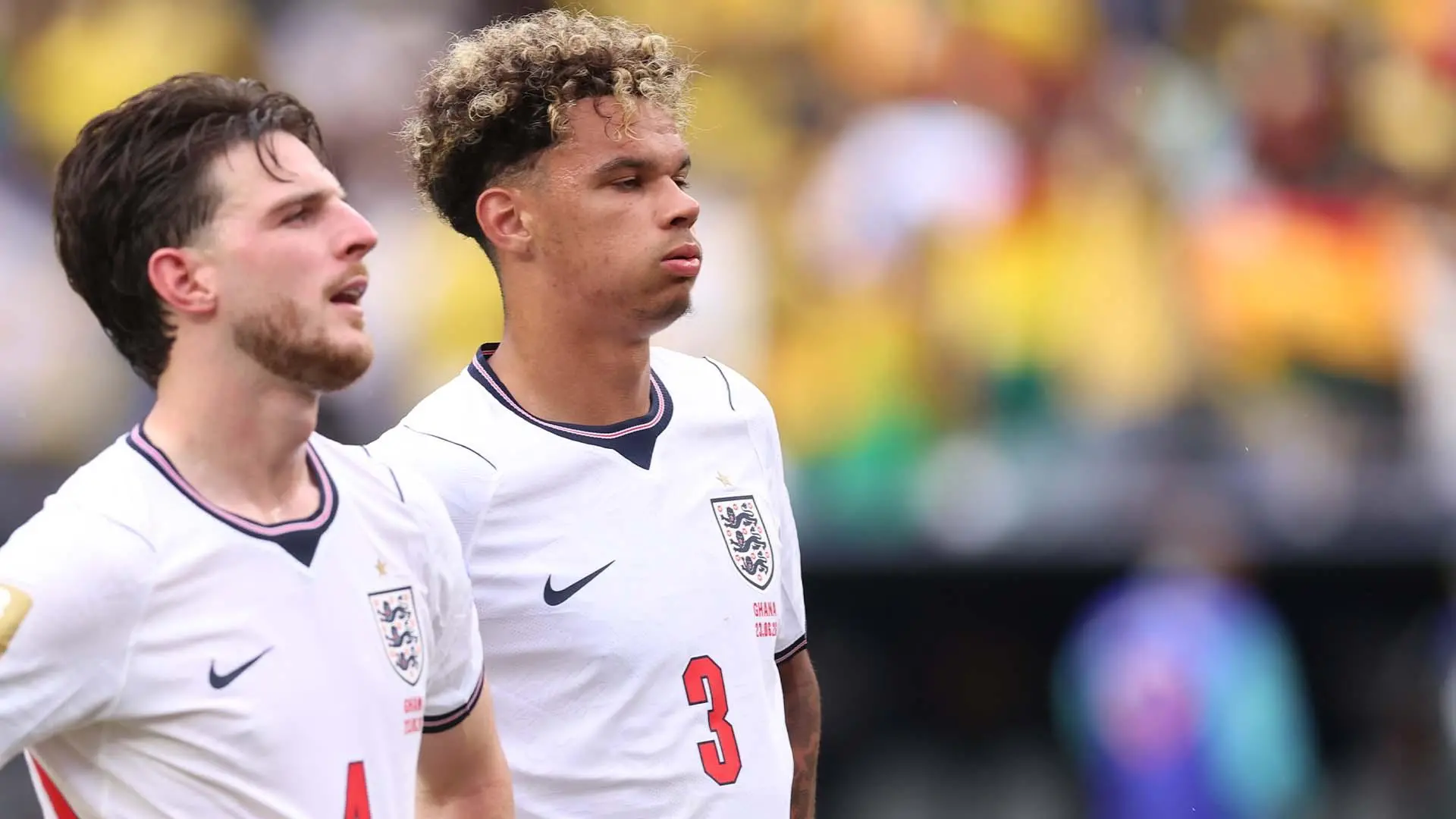
Seven days after producing the highest expected goals figure of any team at the 2026 World Cup in their Croatia victory, England were brought crashing back to earth in Boston. A 0-0 draw with Ghana a result characterized by sterile possession, an isolated Harry Kane, no shot on target in the entire first half, and a lack of creative variation that exposed the absence of a credible Plan B has reignited every familiar question about Thomas Tuchel’s England heading into a must-improve final group game against Panama.
The numbers tell an almost unbelievable story. England dominated 78.8% of possession the highest recorded by any team at this World Cup and still failed to score. No team in World Cup history has been so possession-dominant without finding the back of the net. For football fans in Kenya and across the world watching England’s tournament campaign, this was the performance that turned cautious optimism into genuine concern.
📊 England vs Ghana — 2026 World Cup Match Stats
- Final Score: England 0-0 Ghana
- Venue: Gillette Stadium, Boston, USA — June 24, 2026
- England possession: 78.8% — highest of any team at the 2026 World Cup
- First shot on target: 57th minute — first half completely blank
- Harry Kane touches: 19 — lowest in any major tournament game in his England career
- Kane’s reaction: “I was waiting for the ball to bounce my way”
- Ghana shots on target: 0 — first game of the tournament with no accurate effort from either team in the first half
- England xG vs Croatia: 3.20 — highest of all 48 nations at the tournament
- England Group L standing: 4 points — final game vs Panama (June 27)
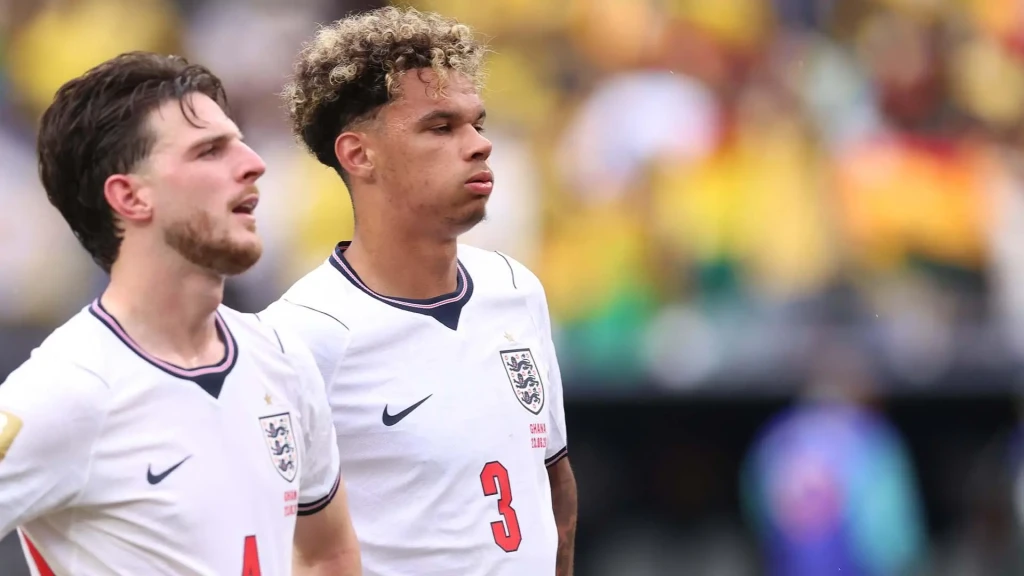
England’s Worst Half of the Tournament: No Shot on Target in 45 First-Half Minutes
The context of this England performance makes it particularly difficult to process. Last week in Dallas, against Croatia, Tuchel’s side produced a first half of incisive, pace-driven, high-tempo football that dismantled a technically sophisticated European opponent. The xG figure of 3.20 was the highest recorded by any of the 48 nations at the 2026 World Cup. Tuchel even admitted to enjoying the “thrills and spills” football that performance represented.
In the cooler temperatures of Boston, England looked like a completely different team. The first half produced zero shots on target from either side the first occurrence of a completely shot-on-target-free opening 45 minutes in the entire 2026 tournament. Ghana’s deep, compact 5-4-1 block absorbed England’s possession without ever being genuinely threatened, and the Three Lions could find no mechanism to break through.
England were made to wait until the 57th minute before landing their first shot on target a wait that, combined with the 78.8% possession statistic, encapsulates everything that went wrong against Ghana. Dominance on the ball means nothing if it generates no danger. And England, for most of Tuesday evening in Boston, generated no danger at all.
Kane’s 19 Touches: The Most Isolated England Have Ever Made Their Captain Look
At the center of England’s attacking dysfunction was a statistic that will disturb the Three Lions’ coaching staff more than any other from the evening: Harry Kane recorded just 19 touches in 90 minutes the lowest total he has ever recorded in a major tournament game for England when playing the full 90 minutes.
The number is not merely low it is a damning indictment of how completely Ghana’s tactical approach neutralized England’s primary attacking weapon. Carlos Queiroz had a specific, detailed plan to keep Kane out of the game man-marking him throughout, denying him the space to receive between the lines, and ensuring that every England build-up sequence was forced into wide areas where Ghana’s defensive shape was strongest.
Kane himself acknowledged the isolation with characteristic honesty after the match: “I was waiting for the ball to bounce my way.” For a striker of his quality a player who scored 61 goals in the domestic season and entered this World Cup in the form of his career the image of England’s captain reduced to waiting and hoping for scraps is one of the most jarring of the entire tournament.
The late moments provided brief but ultimately painful encouragement. A flurry of chances in the final minutes triggered by the substitutes’ arrival saw Nico O’Reilly nod against the crossbar from close range. Kane then took the rebound and ballooned it well over the bar. For a striker who has spent the season converting exactly these chances at Bayern Munich, the miss and the evident anxiety behind it suggested that the pressure of a goalless World Cup match had got to even the most experienced head in the England squad.
Why did Harry Kane only have 19 touches against Ghana?
Ghana coach Carlos Queiroz implemented a deliberate man-marking system specifically designed to deny Kane receiving positions and isolate him from England’s midfield supply lines. By placing a physical marker on Kane throughout the match and ensuring the defensive block denied space between the lines, Queiroz successfully neutralised England’s primary threat while leaving Tuchel without an effective alternative route to goal.
Ghana’s Tactical Masterclass: How Carlos Queiroz Neutralised England’s Every Threat
Credit must be given where it is unambiguously due. Carlos Queiroz one of the most experienced international coaching minds at this World Cup delivered a tactical masterclass that completely suffocated England’s attacking arsenal. Ghana are one of only four teams yet to concede a single goal at the 2026 World Cup and their performance in Boston demonstrated exactly why.
Queiroz’s approach was built around three specific neutralisation strategies:
- Man-marking Kane throughout — denying England their primary forward target and forcing every attacking sequence into areas where Ghana’s defensive shape was most organised
- Compact 5-4-1 low block — packing the defensive third with bodies, eliminating the space between the lines that England’s midfielders need to play progressive passes, and ensuring no corridor opened for pace runners like Anthony Gordon and Nico O’Reilly
- Deliberate disruption of rhythm — through cynical fouls, time-wasting, and constant interruption of England’s passing sequences, preventing any sustained period of flowing, high-tempo football from developing
The strategy worked completely for 57 minutes. Declan Rice’s post-match acknowledgement “It’s always difficult when you play against 11 behind the ball. Give credit to Ghana, they were very compact” was a fair, if frustrating, assessment of an evening where the opponents executed their game plan to perfection while England failed to find a response.
The Plan B Problem: What Happens When England Can’t Play Through a Deep Block?
The most significant tactical question that England’s draw with Ghana raises is not about this game specifically it is about the knockout rounds that are now approaching. Panama, their final group game opponent, will also sit deep and absorb England’s possession. Every team England face in the Round of 32 and beyond, should they advance, will study the Ghana blueprint and attempt to replicate it.
Tuchel has been admirably clear about his preferred approach a high-pace, high-press, wide-attacking system built around the pace of Gordon, O’Reilly, and Saka, with Kane as the focal point of central delivery. Against Croatia, that system was devastating. Against Ghana, it was rendered entirely ineffective.
The uncomfortable question that fans and analysts are now asking ‘What if England could call on Cole Palmer’s intelligence? What if Phil Foden was an option?’ is not simply nostalgia for omitted players. It reflects a genuine structural gap. Tuchel’s Plan A is physicality, pace, and pressing. There is no clearly identifiable Plan B. No player capable of unlocking a deep block through individual brilliance, no creative pivot who can change the game’s tempo through intelligence rather than athleticism.
The Palmer and Foden question will not go away. Both players offer exactly the kind of controlled possession intelligence and creative unpredictability that England lacked against Ghana the ability to play through tight spaces, find pockets between lines, and create chances from situations where brute force and pace provide no answers. Their absence from the squad is a creative limitation that Tuchel’s first-choice system can paper over against sides that engage but cannot disguise against sides that retreat and absorb.
Does England have a Plan B if teams sit deep against them?
England’s current squad and system has been explicitly built around pace, pressing, and directness a Plan A that works brilliantly against teams that commit to an open game. Against deep defensive blocks, the evidence from the Ghana match suggests England lack a clear alternative mechanism. The introduction of Rogers, Rashford, and Saka from the bench improved England’s attacking threat, hinting that at least one of that trio may now have a case for a starting shirt against Panama and beyond.
Second-Game Syndrome: England’s Four-Tournament Pattern That Refuses to Go Away
The Ghana draw was not merely frustrating it was historically familiar. England have now failed to win their second group game at four consecutive major tournaments: a goalless draw against Scotland at Euro 2020, a goalless draw against the USA at the 2022 World Cup, a goalless draw against Slovenia at Euro 2024, and now a goalless draw against Ghana at the 2026 World Cup. Like clockwork. Same position, same result, same questions.
The pattern is so consistent that it has become a defining feature of England’s major tournament psychology the ability to produce a strong opening performance, followed by a cautious, conservative second game where the weight of expectations and the desire not to lose overrides the creativity needed to win. The fact that England have subsequently progressed from these positions reaching back-to-back European finals provides the “bigger picture” reassurance that Tuchel pointed to after the match.
But reassurance built on historical survival is not the same as confidence built on tactical solutions. The knockout stages eliminate the luxury of recovery. One match where England cannot unlock a deep defensive block means exit not a third group game against a more open opponent.
Rogers, Rashford & Saka Off the Bench: The Case for Rethinking the Starting XI
The most encouraging aspect of a deeply frustrating evening in Boston was the impact that England’s substitutes made after their introduction. Morgan Rogers, Marcus Rashford, Bukayo Saka, and Nico O’Reilly all came off the bench in the second half and collectively transformed England’s attacking threat in the final twenty minutes into something that resembled the Croatia performance rather than the Ghana stalemate.
O’Reilly’s introduction provided immediate energy and width his nodded effort against the crossbar in the closing minutes representing the clearest chance England created across the entire 90 minutes. The combination of Rogers’ intelligent movement, Rashford’s directness, and Saka’s ability to carry the ball and create in tight spaces gave England a dynamism that had been entirely absent from the first-team setup.
Tuchel will face difficult selection decisions ahead of the Panama fixture on Saturday. The performance of the substitutes against Ghana has given each of Rogers, Rashford, and Saka a credible case for a starting role not merely as alternatives but as starters in a more dynamic attacking system better equipped to cope with deep defensive opposition. The Panama game, against a side that will inevitably sit deep, provides the perfect immediate test of whether Tuchel has the flexibility to adjust.
Panama on Saturday: What England Must Fix to Restore World Cup Momentum
England’s final group game against Panama at MetLife Stadium in New Jersey on Saturday evening arrives at the perfect moment a winnable fixture against a side that will inevitably defend deep, providing Tuchel with both the opportunity and the obligation to solve the tactical puzzle that Ghana exposed.
Four specific improvements are required:
- Better Kane supply: The entire midfield must prioritize getting the ball to Kane in positions where he can turn, hold up play, and bring runners from deep into the game rather than allowing him to drift isolated on the periphery as he did against Ghana
- Wider attacking width: England need their wide players arriving later into crossing positions, rather than receiving the ball static and facing defenders who have time to organise. O’Reilly’s late introduction and immediate impact suggested this is achievable with the right personnel from the start
- Tempo variation: England played too slow against Ghana allowing the defensive block time to reset after every attacking sequence. Quicker, more direct transitions in the second half of build-up phases would create the gaps that careful sideways passing never will
- Starting XI bravery: Tuchel must be willing to start Rogers, Rashford, or Saka rather than waiting until the 65th minute to introduce the creativity the game demands from the first whistle
England’s Croatia xG of 3.20 the highest at the tournament proved that this squad is capable of exactly the kind of attacking football that World Cup knockout rounds demand. The Ghana performance proved that the same squad is also capable of exactly the passive, uninspired football that ends World Cup campaigns prematurely. Saturday’s game against Panama is not just about three points. It is about which version of England shows up for the knockout rounds.
Frequently Asked Questions: England vs Ghana 2026 World Cup
What was the score of England vs Ghana at the 2026 World Cup?
England and Ghana drew 0-0 at Gillette Stadium in Boston on June 24, 2026. It was England’s second game in Group L of the 2026 World Cup and means they have four points heading into their final group game against Panama on June 28. Ghana remain one of just four teams yet to concede a goal at the 2026 World Cup.
How many touches did Harry Kane have against Ghana?
Harry Kane recorded just 19 touches in 90 minutes against Ghana the lowest total in any major tournament game in his entire England career. Ghana’s man-marking system, deployed by coach Carlos Queiroz, successfully isolated Kane from England’s midfield supply and neutralized his influence entirely throughout the match.
Why did England fail to score against Ghana?
England failed to score against Ghana due to a combination of factors: Ghana’s disciplined 5-4-1 low defensive block successfully absorbed England’s possession; Harry Kane was man-marked out of the game with just 19 touches; England had no shot on target in the first half; and Tuchel’s side lacked a creative alternative when their Plan A of pace and directness was neutralized. England recorded 78.8% possession the highest at the 2026 World Cup without scoring.
What is England’s “second-game syndrome” at major tournaments?
England have now failed to win their second group game at four consecutive major tournaments drawing 0-0 against Scotland (Euro 2020), USA (World Cup 2022), Slovenia (Euro 2024), and Ghana (World Cup 2026). The pattern reflects a recurring tendency to produce strong opening performances before becoming conservative and passive in their second fixture, when the pressure of expectations combines with respect for the opposition to create inhibited, uninspiring football.
When does England play Panama at the 2026 World Cup?
England face Panama in their final Group L fixture on Saturday June 28 at MetLife Stadium in New Jersey kick-off at 10pm UK time / 1am EAT (Sunday). A win would confirm England’s group standing, with Tuchel’s side needing a significantly improved attacking performance to restore confidence heading into the Round of 32. Visit the FIFA official website for confirmed broadcast details. Kenyan fans can watch live on DStv SuperSport.
Should Cole Palmer or Phil Foden have been in England’s World Cup squad?
The question of Palmer and Foden’s omissions has intensified following England’s struggle against Ghana’s deep defensive block. Both players offer the kind of creative intelligence and controlled possession quality that England demonstrably lacked against a well-organized opponent the ability to unlock tight spaces through individual brilliance rather than physical pace. Tuchel has maintained that his squad selection was correct, but the Ghana performance has given the debate renewed urgency ahead of the knockout stages where similar defensive setups will become the norm.