The 2026 World Cup semi-finals have their most dangerous occupant confirmed and the rest of the draw should be afraid. France beat Morocco 2-0 in a commanding quarter-final performance in Boston, advancing to the last four with a composure and authority that belied the surface drama of a missed Mbappé penalty and a goalless first half that stretched patience in the Gillette Stadium stands.
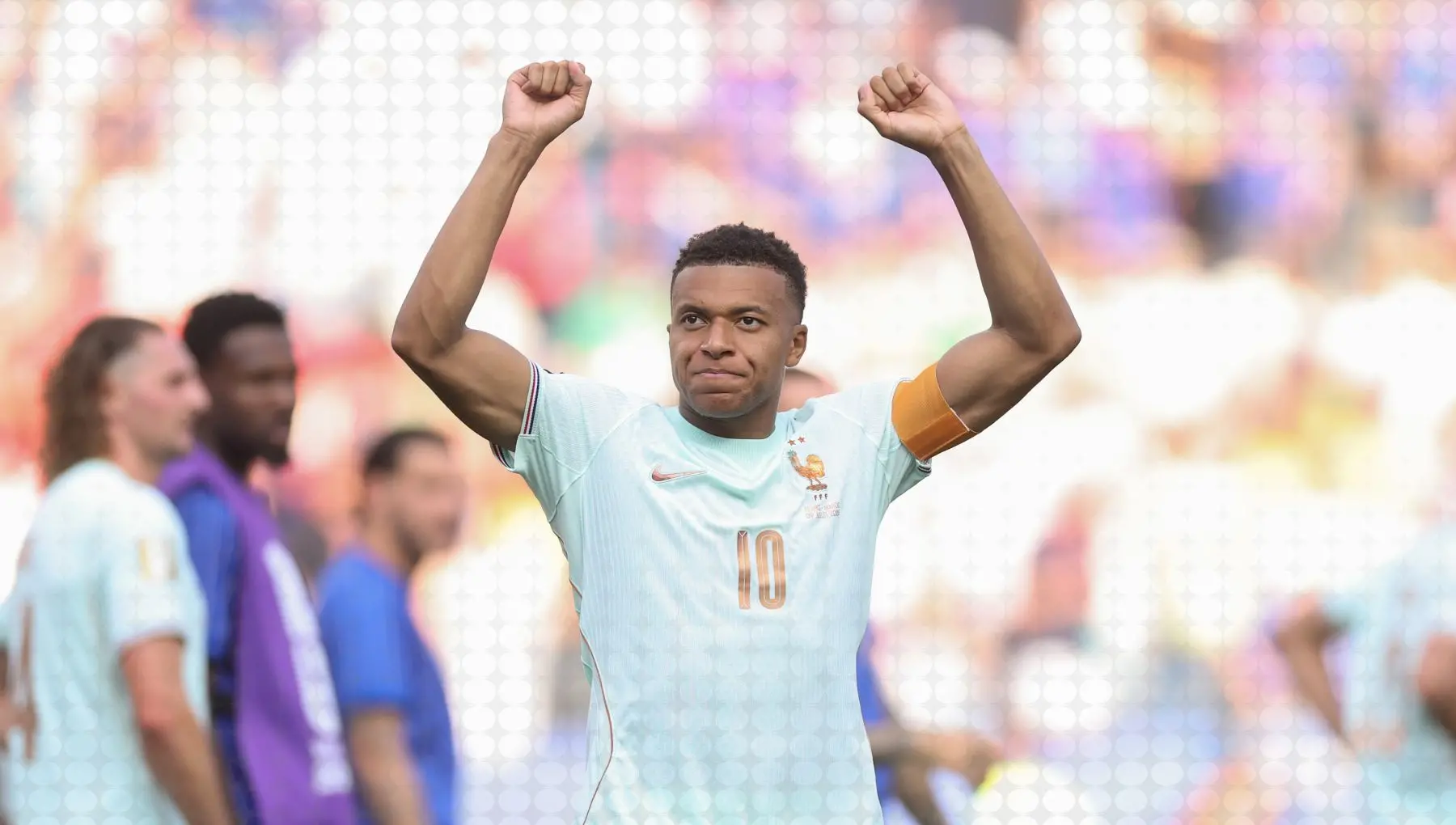
When Kylian Mbappé’s tame spot-kick was saved by the magnificent Yassine Bounou in the 28th minute, the question was whether Morocco could exploit the psychological window. They could not. Mbappé’s response a clinical far-corner finish in the 60th minute, followed by the assist that created Ousmane Dembélé’s 66th-minute second was a masterclass in tournament-level character. France move into the semi-finals. Mbappé has eight goals and three assists in this World Cup. A minor ankle concern prompted a precautionary substitution but the sight of the France captain dancing after the final whistle confirmed what his own words later stated: he is completely fine, and he is far from finished. For football fans across Kenya and the entire African continent watching this extraordinary tournament, France’s march to a potential third consecutive final has the unmistakable feel of destiny.
📊 France vs Morocco — 2026 World Cup Quarter-Final Stats
- Final Score: France 2-0 Morocco
- Venue: Gillette Stadium, Boston, USA — July 9, 2026
- Goals: Mbappé (60′), Dembélé (66′)
- Penalty miss: Mbappé (28′) — saved by Bounou
- Other chances: Upamecano (missed), Doué (saved 35′), Digne crossbar (45+2′)
- Morocco absence: Ismael Saibari — injured, significant attacking loss
- Mbappé sub off: 76′ — minor ankle injury (confirmed not serious)
- Mbappé 2026 WC tally: 8 goals, 3 assists in 6 appearances
- France’s next match: Semi-final vs Spain or Belgium
France Into the Semi-Finals: A Result That Was Never Really in Doubt
The honest assessment of this quarter-final is that the scoreline 2-0 accurately reflects the balance of the match across ninety minutes, even if the two goals arrived later than France’s territorial dominance might have suggested. Didier Deschamps’ side controlled the match with the calm assurance of a team that has not been genuinely threatened in any of their six tournament appearances, and Morocco without the injured Ismael Saibari, whose creative influence had been central to their knockout-stage victories over the Netherlands and Canada could offer almost nothing in attack to disturb that composure.
France created clear chances from the opening minutes. Dayot Upamecano spurned a good early opportunity. Désiré Doué’s shot was saved in the 35th minute. And Lucas Digne struck the crossbar with a swerving long-range effort deep into first-half stoppage time a moment that summed up France’s afternoon: dominant, creative, and frustratingly unable to convert their superiority into goals until the match entered its final third.
When the goals came the 60th and 66th minutes in a six-minute blitz that Morocco had neither the personnel nor the tactical solution to prevent the match was immediately and definitively over. France are in the semi-finals. They will face either Spain or Belgium in the last four. And based on the evidence of six matches in which they have been the tournament’s most comprehensively dominant team, the tournament favourite label belongs to them and nobody else.
Mbappé’s Missed Penalty: Bounou Saves Again to Give Morocco Brief Hope
The match’s most dramatic individual moment and the one that generated genuine uncertainty about whether France would find their way through a stubborn Moroccan defensive effort arrived in the 28th minute. Noussair Mazraoui’s lunging challenge on Mbappé inside the penalty area was clear, unavoidable, and immediately flagged by the referee. France had a penalty in a World Cup quarter-final. Mbappé had the spot-kick. The outcome seemed predetermined.
But Yassine Bounou had other ideas. The Moroccan goalkeeper who had been the hero of the Netherlands penalty shootout in the Round of 32, saving Crysencio Summerville’s decisive kick produced another moment of goalkeeping brilliance in the most pressurised circumstance. Mbappé’s run-up included a lengthy, deliberate stutter-step pause designed to deceive the goalkeeper into committing early. Bounou waited. And when Mbappé struck a tame, central effort without the conviction or placement of his best penalty technique — Bounou saved it comfortably, diving to his left and clutching the ball cleanly.
For approximately thirty minutes after the save, Morocco carried the possibility — however slender — that the missed penalty might define the match. Their defensive discipline remained intact. Their transitions, limited without Saibari, created occasional half-chances. The first half ended goalless. The quarter-final, briefly, had become interesting.
How did Bounou save Mbappé’s penalty?
Bounou saved Mbappé’s 28th-minute penalty by waiting for the France captain to commit to a direction despite Mbappé’s deliberate stutter-step approach designed to force an early dive. When Mbappé struck a tame, central effort without sufficient pace or placement, Bounou had time to react and saved cleanly to his left. It was Bounou’s second major penalty save of the 2026 tournament, following his decisive stop against Summerville in the shootout against the Netherlands.
Mbappé’s 60th-Minute Redemption: The Far Corner Finish That Ended the Quarter-Final
The psychology of a missed penalty at this stage of a World Cup is a genuine test of character — and Mbappé’s response to his 28th-minute failure was the most emphatic possible expression of tournament-level mental fortitude. He did not hide. He did not retreat to the periphery of France’s attacking play. He kept demanding the ball, kept driving into the spaces Morocco’s defensive shape was creating, and kept trusting that the moment to atone would arrive.
It arrived in the 60th minute. The move that created the goal demonstrated exactly why France’s attacking combinations are so difficult to defend against at the highest level. A fluid sequence of passes through the thirds opened the space that Morocco’s shifting defensive line had been working to close all afternoon. The ball reached Mbappé in a position between the penalty spot and the outside edge of the area — a location where he is at his most dangerous, with the angle and the speed to shoot before a defender can close him down.
He took one touch to set the ball on his preferred foot and drove a precise, low strike into the far corner — the kind of finish that demands both technical quality and composure in the fraction of a second available. Bounou, despite his earlier heroics, had no chance. France 1-0. The quarter-final had been decided by the player who had missed the penalty thirty-two minutes earlier. That is Kylian Mbappé at a World Cup.
Dembélé’s 66th-Minute Sealer: France’s Deadliest Combination Strikes Again
Six minutes after breaking Morocco’s resistance, France confirmed the semi-final with a second goal of equal quality — and delivered through a combination that has been one of the most reliable and devastating attacking partnerships at the entire 2026 World Cup.
Mbappé turned provider — driving toward Morocco’s penalty area and drawing the last line of defensive attention before slipping a perfectly timed pass into the corridor that Dembélé was already running into at pace. The Ballon d’Or winner received the ball in stride and, without breaking his momentum, struck a low, firm shot that crept past Bounou’s desperate dive and into the far corner. 2-0. The quarter-final was finished. France’s semi-final place was confirmed.
The Mbappé-Dembélé combination — which has produced goals, assists, and match-defining moments across multiple tournament fixtures — is now established as the most potent attacking relationship at the 2026 World Cup. Between them, the two players have accumulated the kind of combined goal and assist statistics that make defending France almost impossible when both are operating at their tournament best.
Morocco’s Brave Exit: Saibari’s Injury, a Proud Campaign & a Continent’s Hope
For Morocco and the African continent, this quarter-final exit carries the bittersweet quality of a genuinely admirable tournament run that ultimately encountered opposition of a higher level than any other they faced at the 2026 World Cup. The Atlas Lions had beaten the Netherlands on penalties, eliminated Canada with professionalism and organisation, and arrived at the quarter-final stage having demonstrated exactly the qualities — defensive resilience, set-piece threat, collective discipline — that made them such a formidable opponent throughout.
The absence of Ismael Saibari — injured ahead of the match and unable to play — was a loss that fundamentally changed Morocco’s attacking capacity. Saibari had been the primary creative outlet for Morocco’s transition play and the player most capable of finding the gaps in high-defensive blocks that France construct so efficiently. Without him, Morocco’s forward threat was almost non-existent across ninety minutes — reducing a side that had shown genuine attacking quality throughout the tournament to a defensive exercise with no realistic route to an equaliser.
Morocco head coach Mohamed Ouahbi was dignified and forward-looking in defeat: “The future will be bright if we continue like this. We know we represent more than just one country. We represent the Moroccan people, and many countries across Asia and Africa. Many people see themselves in this team, and we’ll keep working to win titles in the future.”
For the millions of football supporters across Kenya and the African continent who have followed Morocco’s World Cup journey with enormous pride, this exit does not diminish what the Atlas Lions have achieved. Two consecutive quarter-final appearances — reaching the same stage as 2022, where they went further still to the semi-finals — confirms Morocco as Africa’s most consistent World Cup force and a genuine contender for the 2030 tournament and beyond.
Mbappé’s Minor Ankle Concern: The Substitution That Briefly Terrified France
The match’s most anxiety-inducing moment for French supporters came not from Morocco — but from the sight of Mbappé going down in the 76th minute and subsequently being replaced by Jean-Philippe Mateta. For approximately ten minutes, speculation swirled about whether France’s captain and tournament talisman had picked up an injury that could threaten his semi-final availability.
The sight of Mbappé dancing after the final whistle provided immediate reassurance — and his post-match words confirmed the benign reality. He said: “I have a minor ankle injury, but I am completely fine. Mateta was in a better position to play the remaining minutes of the match and was fitter at that moment. That is all that happened.”
The explanation is consistent with the approach of a management team that understands the physical demands of a World Cup semi-final and was unwilling to risk further aggravation of a minor issue when the match was already won. With France facing either Spain or Belgium in the last four, Mbappé’s full availability is the most important single factor in any assessment of their prospects.
Eight Goals, Three Assists: Mbappé’s 2026 World Cup Campaign in Full
The full statistical picture of Mbappé’s 2026 World Cup campaign — through six matches to the semi-final stage — now stands as one of the most extraordinary individual tournament contributions in the history of the competition.
⚽ Mbappé’s 2026 World Cup — Match-by-Match
| Match | Stage | Goals | Assists |
|---|---|---|---|
| vs Senegal | Group I | 1 | 1 |
| vs Iraq (suspended) | Group I | 1* | 0 |
| vs Norway | Group I | 0 | 0 |
| vs Sweden | Round of 32 | 2 | 1 |
| vs Paraguay | Round of 16 | 2 | 1 |
| vs Morocco | Quarter-final | 2 | 1 |
| TOTAL | 8 | 3* |
*Iraq match suspended at half-time (lightning storm); goal counted. Messi’s all-time record: 18 goals. Mbappé trails by 10 going into the semi-finals.
With a minimum of one semi-final and potentially a final still to play, Mbappé’s Golden Boot lead is substantial and growing. His combination of eight goals and three assists represents the most complete individual tournament contribution since Ronaldo’s record-breaking campaign. The question dominating the remaining stages of the 2026 World Cup is no longer whether Mbappé can break Messi’s all-time record at this tournament — 10 goals in two matches is beyond realistic expectation. It is whether, across the next two tournaments, he becomes the greatest World Cup scorer of all time. Everything about this campaign suggests the answer is yes.
Frequently Asked Questions: France vs Morocco 2026 World Cup Quarter-Final
What was the score of France vs Morocco in the 2026 World Cup quarter-final?
France beat Morocco 2-0 in the 2026 World Cup quarter-final at Gillette Stadium in Boston on July 9, 2026. Kylian Mbappé scored in the 60th minute and Ousmane Dembélé added a second in the 66th minute, after Mbappé had missed a penalty in the 28th minute that was saved by Yassine Bounou.
Why did Mbappé go off against Morocco?
Mbappé was substituted in the 76th minute with a minor ankle injury. He confirmed after the match that he is completely fine, and that Jean-Philippe Mateta was in better condition to play the final minutes with the result already secured. The sight of Mbappé dancing after the final whistle confirmed his good health, and France expect him to be fully fit for the semi-final.
How many goals has Mbappé scored at the 2026 World Cup?
Kylian Mbappé has scored 8 goals at the 2026 World Cup — with three assists across six appearances. His brace against Morocco took him to the landmark. He is the outright Golden Boot leader and France’s route to the semi-final has been built substantially on his extraordinary individual contribution.
Why did Morocco lose to France?
Morocco’s defeat was shaped significantly by the absence of Ismael Saibari through injury — removing their primary creative and transitional outlet and leaving their attack without a genuine mechanism to threaten France’s defensive block. Without Saibari, Morocco could produce almost nothing in attack across ninety minutes and were unable to capitalise on the psychological opening created by Bounou’s penalty save.
Who does France play in the semi-finals?
France will face either Spain or Belgium in the 2026 World Cup semi-final. The other quarter-final between those two nations determines France’s last-four opponent. Visit the FIFA official website for confirmed semi-final fixtures, venues, and kickoff times. Kenyan fans can watch all remaining matches live on DStv SuperSport.
How far has Morocco gone in consecutive World Cups?
Morocco reached the quarter-final of the 2026 World Cup — their second consecutive appearance at this stage after their historic semi-final run at the 2022 World Cup in Qatar. The Atlas Lions have established themselves as Africa’s most consistently successful World Cup side, and their head coach Mohamed Ouahbi confirmed the squad will continue working toward winning major titles in the future.