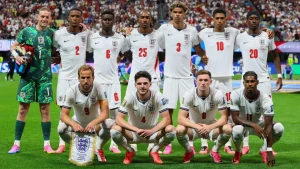
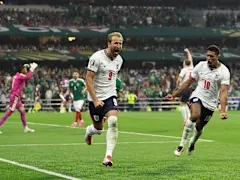
England are in the World Cup semi-finals. Jude Bellingham has scored in consecutive knockout games for the second time in this tournament. And the question that is dominating the football conversation after the 2-1 extra-time victory over Norway is not whether England can reach the final — it is whether they can reach it playing at this level without getting punished by the two opponents who might await them. Argentina in the semi-final. Potentially France or Spain in the final.
The honest assessment from those watching England most closely is the same one Thomas Tuchel delivered in his post-match press conference: the performances need to improve significantly. But the counter-argument — and it is a powerful one — is that England have a player capable of delivering match-winning individual moments even when the collective team performance is below its highest level. Jude Bellingham. The X-factor. The man making this summer unlike any England summer in a generation. For football fans across Kenya and the entire African continent watching England’s extraordinary tournament run, here is the complete analysis of where England stand heading into their most important match since 1990.
🏴 Bellingham’s 2026 World Cup — Statistical Context
- Goals at this World Cup: 6 — in 6 appearances
- Career England goals at major tournaments: 9 of his 12 England goals
- Historic record: First player to score in back-to-back knockout games at a single World Cup since Diego Maradona, 1986
- England players to score 5+ at one World Cup: Bellingham (6), Gary Lineker (6 in 1986), Harry Kane (6 in 2018, 6 in 2026)
- England caps: 50 — at just 23 years old
- Next match: Argentina semi-final — Atlanta, Wednesday July 15
“Teams Win Leagues. X-Factor Wins Tournaments.” — Why Bellingham Makes England Genuinely Dangerous
The distinction between team quality and tournament X-factor is one of football’s most discussed but rarely precisely defined concepts. The broad truth it captures is this: over a league season, the most consistently excellent team wins. Over a seven-match tournament, individual moments of genius — a free-kick, a rebound, a 93rd-minute extra-time slide — can carry a team through games their collective performance alone could not have won.
England have two of these players. Jude Bellingham has six World Cup goals in six games. Harry Kane has six goals across this tournament. Between them, they have scored every England goal in the knockout rounds. The concentration of England’s X-factor quality in two specific individuals is both the team’s greatest strength and, as Tuchel himself acknowledged after the Norway match, a vulnerability that more sophisticated opponents may find ways to neutralise.
But the counter-argument is compelling and sits entirely within the recent history of this tournament: Argentina have Messi. France have Mbappé. These are players whose X-factor quality has defined their respective campaigns just as completely as Bellingham’s has defined England’s. The 2026 World Cup is, more than any previous edition, a tournament being decided by individual moments of genius rather than collective tactical systems. In that context, England’s possession of Bellingham and Kane is not a liability — it is their primary competitive advantage.
“We have an X-factor player in Jude Bellingham, and also Harry Kane. We have X-factor in abundance with those two. When you have players like that, you always have a chance of winning tournaments.”
Bellingham’s Maradona Record: The Historic Comparison That Places Him in Football’s Greatest Company
The statistical record that Bellingham achieved against Norway deserves its full historical context — because the name it sits alongside is not merely impressive, it is the most significant single-player World Cup comparison available in the history of the sport.
Bellingham is the first player to score in consecutive knockout stage games at a single World Cup since Diego Maradona in 1986. Not Messi. Not Ronaldo. Not Mbappé at his most prolific. Maradona — the 1986 World Cup, Argentina’s triumph in Mexico, the tournament that is widely considered the greatest individual World Cup campaign in the history of the sport. The comparison is not an overstatement. It is the precise statistical record that links what Bellingham is producing in 2026 to what Maradona produced forty years earlier.
The accompanying England-specific record is equally remarkable. With six goals at this World Cup, Bellingham joins Gary Lineker (1986) and Harry Kane (2018 and now 2026) as the only England players in history to score five or more goals at a single World Cup tournament. He did so at 23 years old. In his first World Cup as the unambiguous, first-name-on-the-teamsheet central figure of the England side rather than an exciting promise playing a supporting role.
And the broader career context: nine of Bellingham’s 12 England goals have come at major tournaments. He is not merely a player who performs well in the pressure of knockout football — he is a player who appears to require that pressure to produce his best. The biggest stages, the highest stakes, the most exhausted and tense atmospheres: this is where Bellingham’s performance level peaks rather than dips. That is the definition of an X-factor player.
“Well on His Way to Being an England Great”: The 50-Cap, 23-Year-Old Assessment
The assessment that Bellingham is on his way to being an England great is not hyperbole — it is a sober statistical and historical evaluation from someone who has watched England players at the highest level for decades. At 23 years old and 50 England caps, Bellingham already has a career international profile that most players reach in their late twenties.
The cap count at his age is extraordinary in itself. Fifty senior international appearances at 23 reflects a playing career that has been entirely free from the kind of injury, loss of form, or managerial oversight that delays most players’ international development. He has been available, he has been selected, and he has performed — consistently enough that the debate about whether he should start for England, which apparently existed a few months ago before this tournament, now looks incomprehensible in retrospect.
“Only a few months ago we were debating whether it was Jude Bellingham or Morgan Rogers playing. How mad are we to even have thought that? No disrespect to Rogers but Bellingham is on another level. He’s a superstar.”
The “levels” distinction is important and honest. There are many good players in international football. There are fewer genuinely excellent players. And above that, a very small group of players — at any given moment in any given era — who operate at a level that transcends the excellent and enters something rarer. Bellingham is moving into that tier. The evidence of this World Cup has been conclusive.
Tuchel’s Warning: England Must Improve Before Argentina — and Significantly Before France or Spain
The post-match mood at England’s camp was not entirely celebratory — and the candour of Tuchel’s assessment in his press conference deserves direct engagement rather than comfortable dismissal. England’s head coach was visibly unhappy with the performance against Norway despite the result. He said so publicly. And the concern is legitimate.
The honest assessment of England’s Norway display is that it was a victory of individual quality over collective performance. Norway’s 4-1-2-3 structure disrupted England’s midfield progression for extended periods. The right-flank vulnerability that the tactical data had identified as England’s primary weakness was exposed repeatedly. Declan Rice — operating below full fitness due to his stomach illness — was unable to provide the pressing intensity and distribution quality that makes England’s midfield function at its highest level. And the creative depth beyond Bellingham and Kane remained thin.
Against Argentina and Messi — a team that has been tactically polished across seven matches and whose collective quality extends far beyond a single individual — the same defensive vulnerabilities and creative limitations will be punished more severely. Against France or Spain in a hypothetical final, the margin for the kind of unforced errors that Norway’s game plan generated would be essentially zero.
Tuchel is not celebrating a semi-final place. He is working. And the players who understand what is required — from Rice’s fitness recovery to the need for Saka to perform at his Arsenal best from a starting position rather than a substitutes’ cameo — understand the scale of what the next 96 hours demands.
What does England need to fix before the Argentina semi-final?
The three primary requirements identified by analysis of the Norway match are: a fully fit Declan Rice orchestrating England’s pressing structure and distribution at full intensity; Bukayo Saka starting rather than entering as a substitute, providing the wide creativity that has been most impactful when he has had full minutes; and the midfield unit delivering tighter protection of the space behind England’s high defensive line that Norway’s transitions targeted repeatedly.
The Rice Problem: England Cannot Afford Their Captain Operating Below Full Fitness
The most specific and actionable concern from the Norway performance centres on Declan Rice. England’s captain — who normally puts the ball on a sixpence from corners, who provides the pressing intensity and distribution quality that allows Bellingham to operate with attacking freedom, and who is the structural foundation of England’s entire midfield system — was visibly below his best against Norway.
The evidence was specific: a corner delivery against Norway that failed to beat the first man — a set-piece execution that is so far below Rice’s Arsenal standard that it can only be explained by the ongoing physical effects of the stomach bug that had isolated him from the squad earlier in the week. The illness clearly reduced his physical output even if it did not prevent him from starting.
The positive reading of the situation: if the illness rather than a deeper fitness problem was the cause, Rice has several days to recover before Wednesday’s Argentina semi-final. The squad depth around him — as demonstrated by the substitutions against Norway — means Tuchel has options if Rice cannot reach his required level. But those options, however talented, do not replicate what Rice provides when fully fit. England at their best need Rice at his best. The Argentina semi-final is not the match to play with a midfield engine running at 70 per cent capacity.
Argentina Semi-Final Analysis: England Can Win — But They Have to Be Better
The Argentina semi-final carries a weight that extends beyond tactics, squad depth, and expected goals calculations. It is Argentina and England at a World Cup — the most historically loaded international football fixture available, carrying the unresolved emotional residue of 1986 and the competitive fire that comes from two nations who genuinely do not like losing to each other.
Argentina — who eliminated Switzerland in the quarter-finals — arrive in Atlanta having been this tournament’s most consistently excellent squad-level performer. Where England have relied on Bellingham’s individual brilliance to carry them through difficulties, Argentina have shown the collective depth, defensive organisation, and attacking variety across multiple players that represents a different kind of threat. Messi’s record-breaking tournament numbers are the headline, but the supporting cast — Di María, Mac Allister, Álvarez — have been genuinely dangerous throughout.
The case for England is compelling and honest: they are a team that has navigated every challenge this tournament has thrown at them. They survived the Azteca with ten men. They won an extra-time war in Miami with Haaland on the opposite side. They have the X-factor player of the tournament. And if Rice returns to full fitness, if Saka starts and produces the performance his talent demands, and if England’s defensive organisation tightens against Argentina’s transitional threat — the three points of evidence that suggest the result could go either way are real and meaningful.
The concern is equally honest: the way England played against Norway, against a team that is talented but not at Argentina’s level of tournament experience and collective quality, would not be sufficient against Messi’s side. Tuchel knows it. The players know it. The question is whether the additional days of preparation, the return of Rice’s fitness, and the specific motivation of facing Argentina in a World Cup semi-final can produce the performance that the occasion requires.
“I can see us beating them, even with the way we are playing at the moment, which isn’t perfect. My only concern is if we get through Argentina. We won’t be able to play like we are playing and beat France or Spain. They will have to be better. They will have to get the simple things right. I personally didn’t think I’d see England win a World Cup in my lifetime, but we are getting closer and closer.”
Frequently Asked Questions: Bellingham England World Cup 2026
What is Jude Bellingham’s World Cup record in 2026?
Jude Bellingham has scored six goals in six 2026 World Cup appearances — making him the joint-highest scoring Englishman at a single World Cup alongside Gary Lineker (1986) and Harry Kane (2018 and 2026). Nine of his 12 England goals have come at major tournaments, establishing him as England’s definitive big-game player.
What is Bellingham’s historic knockout stage record at this World Cup?
Bellingham is the first player to score in consecutive knockout stage games at a single World Cup since Diego Maradona in 1986. He scored the Panama free-kick, the DR Congo dead-ball goal, two goals at the Azteca against Mexico, and a brace against Norway in the quarter-final — delivering decisive contributions in every England knockout match.
Who does England face in the World Cup semi-final?
England face Argentina in the World Cup semi-final at Mercedes-Benz Stadium in Atlanta on Wednesday July 15 at 11pm EAT. The fixture carries enormous historical weight — England and Argentina’s most memorable World Cup meeting was in 1986, when Maradona’s Hand of God and Goal of the Century eliminated England in the quarter-finals.
What does England need to improve before the Argentina semi-final?
The three primary areas for improvement identified after the Norway match are: Declan Rice returning to full fitness after his stomach illness reduced his influence against Norway; tighter midfield protection against Argentina’s transitional threat; and the collective performance level rising to match what individual brilliance from Bellingham and Kane has compensated for in recent knockout matches.
Is Bellingham the best player at the 2026 World Cup?
Bellingham and Mbappé are making the strongest individual cases at this stage of the tournament. Mbappé has eight goals for France — more than Bellingham’s six — but Bellingham’s record of scoring in every knockout match and his Maradona comparison for consecutive knockout goals places him in a unique category. Both are outstanding. The semi-final and potential final will determine which individual legacy is written larger.
Can England win the 2026 World Cup?
England have sufficient talent to win the tournament — Bellingham and Kane as X-factor players, squad depth that allows meaningful impact substitutions, and the psychological resilience demonstrated across the knockout rounds. But the honest assessment is that England’s collective performance level must improve against Argentina, and significantly against France or Spain in a hypothetical final. As Tuchel acknowledged, the Norway performance would not be sufficient against the tournament’s other semi-finalists. The talent is there. The performance must now match it. Visit the FIFA official website for confirmed semi-final details and Golden Boot standings. Kenyan fans can watch live on DStv SuperSport.