Tactical inertia met structural fortitude in Houston, and the underdogs walked away with the bragging rights. World Cup openers always come loaded with narrative, but few offered a contrast as stark as Portugal’s Group K meeting with the Democratic Republic of Congo. On paper it looked lopsided: a European powerhouse stacked with elite talent against a nation returning to the global stage after a 52-year absence. Ninety minutes of high-intensity football tore that script apart.
The game finished 1-1, a scoreline that simultaneously exposed Portugal’s structural inefficiencies and shone a light on DR Congo’s tactical organisation under Sébastien Desabre. Portugal fielded some of the most creative minds in club football, yet they played as disconnected individuals rather than a single unit – all while the psychological weight pressing down on Cristiano Ronaldo warped their attack, as teammates repeatedly funnelled the ball into his feet and choked their own fluency.
Lineups and tactical setup
Roberto Martínez set up in his favoured 4-2-3-1, built to dominate territory and smother the opposition through technical quality. Sébastien Desabre answered with a deeply compact 5-3-2 designed to deny space and strike on the counter. Here is how the two sides lined up:
| Portugal (4-2-3-1) | DR Congo (5-3-2) | |
| Goalkeeper | Diogo Costa | Lionel Mpasi |
| Defence | Cancelo, Araújo, Veiga, Mendes | Wan-Bissaka, Mbemba, Tuanzebe, Kapuadi, Masuaku |
| Midfield | Vitinha, João Neves (double pivot) | Kayembe, Moutoussamy, Mukau |
| Attacking band | Bernardo Silva, Bruno Fernandes, Pedro Neto | – |
| Forward(s) | Cristiano Ronaldo | Cédric Bakambu, Yoane Wissa |
In Portugal’s double pivot, Martínez paired the PSG duo of Vitinha and the 21-year-old João Neves to control tempo, with a creative trident of Bernardo Silva, Bruno Fernandes and Pedro Neto operating behind the 41-year-old captain. Desabre’s back five was anchored by Chancel Mbemba, Axel Tuanzebe and Steve Kapuadi, with Aaron Wan-Bissaka and Arthur Masuaku as disciplined wing-backs, and the quick pairing of Cédric Bakambu and Yoane Wissa leading the counter.
First half: a lightning start masking a midfield disconnect
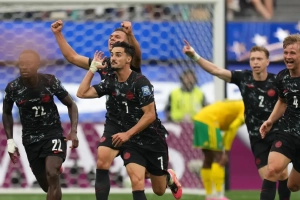
Everything opened to script. In the 6th minute Pedro Neto received a progressive pass on the left, beat his man and whipped in a precise cross; João Neves timed his run perfectly and looped a header beyond Lionel Mpasi. At 21, Neves etched his name into Portuguese history, and the early goal hinted at a rout.
It was a mirage. Once DR Congo settled into their block, the cracks in Portugal’s star-studded midfield surfaced. With Vitinha, Fernandes and Bernardo Silva all instinctively wanting the ball to feet, the lines became uncoordinated: Fernandes kept dropping into spaces already occupied by Vitinha, clogging the central lanes, while Silva drifted infield from the right and congested the zone outside the box.
Rather than moving the ball quickly to stretch a five-man defence, Portugal slipped into slow, sideways circulation. They monopolised 80% of first-half possession and completed 459 passes, but it was sterile dominance – no central combinations to unlock the half-spaces, just predictable wide crosses that Mbemba and Tuanzebe headed away with ease.
The Ronaldo pressure cooker
Layered on top was a psychological weight. The night before, Lionel Messi had grabbed the headlines with a hat-trick against Algeria, while Haaland and Mbappé had both struck braces earlier on the matchday. For Ronaldo, at his milestone World Cup, the pressure to match his great rival and the new generation was immense.
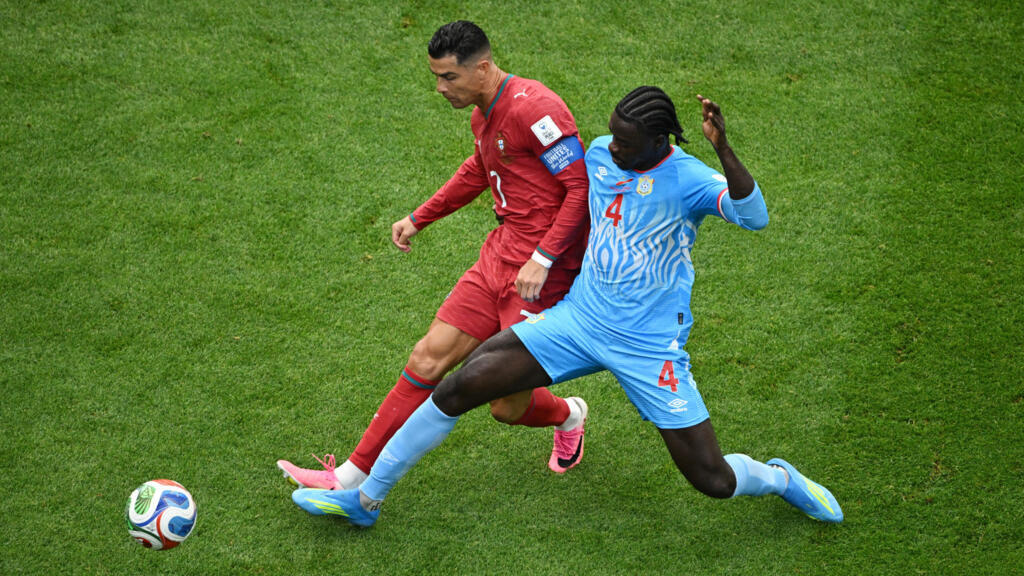
That individual burden distorted Portugal’s attacking shape. Instead of letting play flow through open lanes, the creators developed an obvious bias: whenever Fernandes or Cancelo reached the edge of the final third, they bypassed free teammates to force low-percentage balls into Ronaldo. Swamped by a coordinated three-man central defence led by Mbemba, Ronaldo lost possession again and again, feeding straight into DR Congo’s defensive traps and dismantling Portugal’s own efficiency.
The Leopards strike back: how DR Congo managed the game
While Portugal wrestled with themselves, DR Congo executed with clarity. They did not panic after conceding; they squeezed the space between their defensive and midfield lines and refused to let Fernandes turn between them. In transition they were genuinely dangerous – whenever Moutoussamy or Kayembe intercepted a forced pass meant for Ronaldo, they launched direct balls into the channels for Wissa and Bakambu to chase, exposing the young Araújo-Veiga pairing.
Despite seeing less than a quarter of the ball, DR Congo outshot Portugal 6-2 in the first half and created the better chances. The reward came deep in stoppage time: in the 45+5th minute Masuaku swung a wicked cross into the box from a corner sequence, the Portuguese line lost their markers, and Wissa ghosted in at the back post to power home the equaliser and send the teams in level.
Second half: the ‘waiting staff’ problem
Sensing the lack of width and coordination, Martínez withdrew Bernardo Silva at the break for the explosive Francisco Conceição, later adding Rafael Leão for pace. The changes brought a spark but not a solution: the team kept functioning as “waiting staff,” there to deliver the perfect ball to Ronaldo rather than build fluid, collective goals.
The flaw was laid bare in the 68th minute. Cancelo threaded a clever pass to Conceição, whose cutback rolled into the path of a late-arriving Fernandes – only for Ronaldo to step across his own teammate, snatch the shot and drag it wide. A near-identical sequence followed in the 74th minute, when Leão and Fernandes combined for Conceição, but Ronaldo’s first-time effort under pressure from Tuanzebe spun harmlessly past the near post. Channelling every final-third action through one heavily marked focal point made Portugal remarkably easy to defend.
The final squeeze
The closing ten minutes fractured into chaos. Desabre freshened up with Charles Pickel and Simon Banza, and the Leopards almost stole it: in the 78th minute Bakambu burst through the middle and slipped in Noah Sadiki, who fired just wide. Stung, Portugal poured forward, and in the 91st minute Fernandes surged beyond his own forwards to unleash a fierce 25-yard strike that dragged wide. The whistle confirmed a 1-1 draw.
Portugal vs DR Congo: key match stats
| Metric | Portugal | DR Congo |
| Possession | 80% | 20% |
| Passes completed (1st half) | 459 | – |
| Shots (1st half) | 2 | 6 |
| Goals | 1 (João Neves, 6′) | 1 (Yoane Wissa, 45+5′) |
| Final score | 1 | 1 |
The numbers tell the story neatly: Portugal owned 80% of the ball, but their expected goals output ran completely contrary to that dominance. DR Congo’s discipline, defensive fortitude and transitional threat fully earned them a crucial World Cup point.
Strategic takeaways for Roberto Martínez
This opener is a tactical wake-up call. A midfield of Vitinha, Neves, Silva and Fernandes has more than enough quality to dismantle any defence on earth, but only if the movements are coordinated to bring out their individual strengths – Fernandes’ range of passing, Neves’ defensive work and Vitinha’s tempo control.
The bigger lesson is to abandon the impulse to force every attack through Cristiano Ronaldo. If Portugal can restore structural balance and add variety to their final-third play, their title ambitions remain firmly intact. If they stay tactically stubborn, more organised low blocks will punish them just as ruthlessly as DR Congo did.
Frequently asked questions
What was the score in Portugal vs DR Congo?
The match finished 1-1. João Neves headed Portugal in front in the 6th minute, and Yoane Wissa equalised for DR Congo deep in first-half stoppage time.
Why did Portugal only draw despite 80% possession?
Their possession was sterile. A midfield of ball-dominant creators became uncoordinated, and Portugal repeatedly forced low-percentage passes into a heavily marked Ronaldo instead of building fluid attacks, allowing DR Congo’s compact 5-3-2 to defend comfortably.
How did DR Congo set up tactically?
Sébastien Desabre used a deeply compact 5-3-2, squeezing the space between the lines and springing direct counter-attacks through Yoane Wissa and Cédric Bakambu. They outshot Portugal 6-2 in the first half despite minimal possession.
Who scored for DR Congo against Portugal?
Yoane Wissa scored the equaliser, heading home unmarked at the back post from an Arthur Masuaku delivery in first-half stoppage time.